All posts by tedleeeubanks

Simplicity and Repose

DT1551

Truth is ever to be found in the simplicity, and not in the multiplicity and confusion of things  – Isaac Newton

Interpretation gravitates to the complex. Maybe all human systems have a natural inclination toward convolution, like stormwater sprinting downstream. Bureaucracies certainly hint at this drift. There is refuge to be found in the minutia of complexity.

The principles of interpretation aren’t complex. The rules are limited; the doctrine is easy to grasp. The role of the interpreter is to simplify the complex, not to complicate the simple.

What is difficult to master is the practice of interpretation. The underpinnings of interpretation can be fathomed in a single sitting; the skills that are required demand time, patience.

One can master art history without being an artist. One can become an expert in modern American poetry without being a poet. There is value in art historians and literary critics.

And certainly, one can learn the principles of interpretation without being an interpreter.

The role of the interpreter is to simplify the complex, not to complicate the simple.

Interpretation, as a practice rather than a subject, is mastered through the application of simple principles using skills and intuition that are gained through years of repetition and practice. These principles and skills are means to an end, not ends unto themselves.

The end or objective of interpretation is revelation (Sam Ham calls this objective epiphany). This objective defines interpretation. Revelation is what separates interpretation from its relatives such as technical and scientific writing.

The techniques used to achieve this objective are as numerous and as varied as the people who have mastered the practice. A guitar may have only six strings, yet no two guitarists approach the guitar with identical technical skills. A work of art may consist only of paint and canvas, but the techniques used by a painter are as individual as a fingerprint.

An interpreter gains more than skills with practice; an interpreter gains intuition. A standup comedian quickly learns how to read the crowd. An interpreter learns how to gauge his or her audience. A comedian counts laughs; an interpreter counts revelations.

An interpretive approach that provokes revelation is successful; one that doesn’t fails. Interpretive success or failure, or which techniques are better or worse, are arguments that are only meaningful within the context of revelation. Otherwise, these debates only complicate the practice of interpretation.

Guerrilla interpretation is an applied approach to the craft. At the heart of this approach are the basic, elementary skills that must be mastered to become a practitioner of the interpretive arts. Knowledge and creativity are critical to the practice, as well. Yet without the skills, knowledge and creativity are impossible to express or apply in a way that stimulates revelation.

Simplicity and repose are the qualities that measure the true value of any work of art – Frank Lloyd Wright


What is a theme?

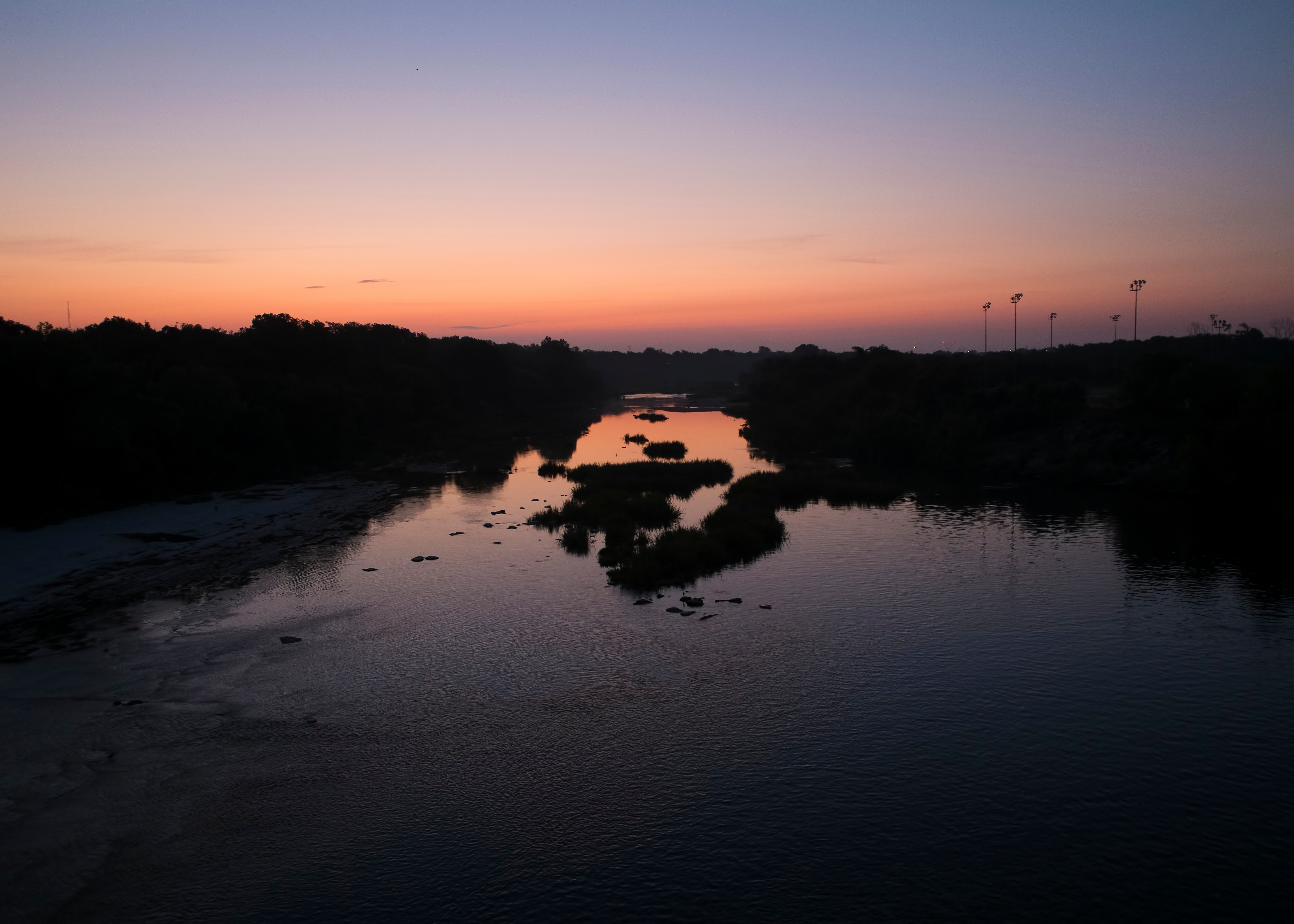
Sunrise on the Colorado River below Longhorn Dam by Ted Lee Eubanks

What is a theme? A theme to me should be the same as to you. An interpretive theme doesn’t differ from a literary theme. There is no need for a new definition of an age-old (Aristotelian) literary concept.

The theme is the main idea or underlying message of a literary work. The theme is a tool that unifies the various elements of the book or essay. A literary work can have more than one theme, although there is often a single theme that underlies the work.

The theme, more importantly, is a central insight that the author provides through his or her writing. A theme is revelatory. In our case, the theme is the central insight (or insights) that the interpreter provides through their interpretation. The most powerful themes are those with insights into the human condition. In other words, the theme of an interpretive walk, if lucky, offers insight not only into nature but into the human experience, as well.

Let’s use my hike along the trail from my previous article as an example. If you remember, I start themelessly. The only sideboards that I place on my interpretation is the trail itself (a thing, not a meaning). The trail and its inhabitants are the subject, not the theme.

I am interested in interpreting what I see and experience. But, walking the trail and simply identifying the flora and fauna offers no insight either into this natural system or into our role within this system. This is guiding, not interpretation. This is information, not revelation.

Field guides, as an example, rarely offer meanings. Field guides are useful tools in identifying things (birds, Civil War weaponry, roadkill) and thus contribute to the overall knowledge that is a necessary part of interpretation. But, being able to tell warblers apart by their tail spots isn’t interpretation in its own right. This is guiding, begging for interpretation. This is information, begging for revelation.

At the start of our walk, I notice a black-and-yellow lichen moth, a highly specialized species. If need be, I could use a field guide to identify the moth. Once I know its identity, I am ready to consider how it will serve my interpretive needs.

I decide that the moth and its dependence on lichen can serve as a motif for the remainder of the walk (think about the simple motif that Ravel uses in Bolero). Specialization restates itself with other species such as the poison-ivy sawfly and the Hercules club beetle. These species become the repeated motif within my theme of specialization.

But, of course, a guerrilla interpreter doesn’t stop with specialization in insects. That theme is too limiting, too restrictive, too shallow. I extend that theme to one that is universal. My theme focuses the walk on the rewards of specialization and its risks within a changing world. In other words, I extend the theme to include the human experience.

I am not finished, though. As I mentioned in the article, there is a take away, a conservation message, that will serve as a coda. A diverse ecosystem supports diverse wildlife. Without the lichen, there is no lichen moth.

I could, in the same talk, note that a diverse economy provides employment opportunities for a diverse population, as well. But, the interpreter’s role is not to spoon-feed meanings. As I said in the previous article, we plow the ground where a visitor’s own ideas and revelations can be nurtured. In this case, I will leave the visitor with a clear understanding of the relationship between rich and diverse habitats and biodiversity, and let them explore the universality of this simple message.

My theme focuses the walk on the rewards of specialization and its risks within a changing world. In other words, I extend the theme to include the human experience.

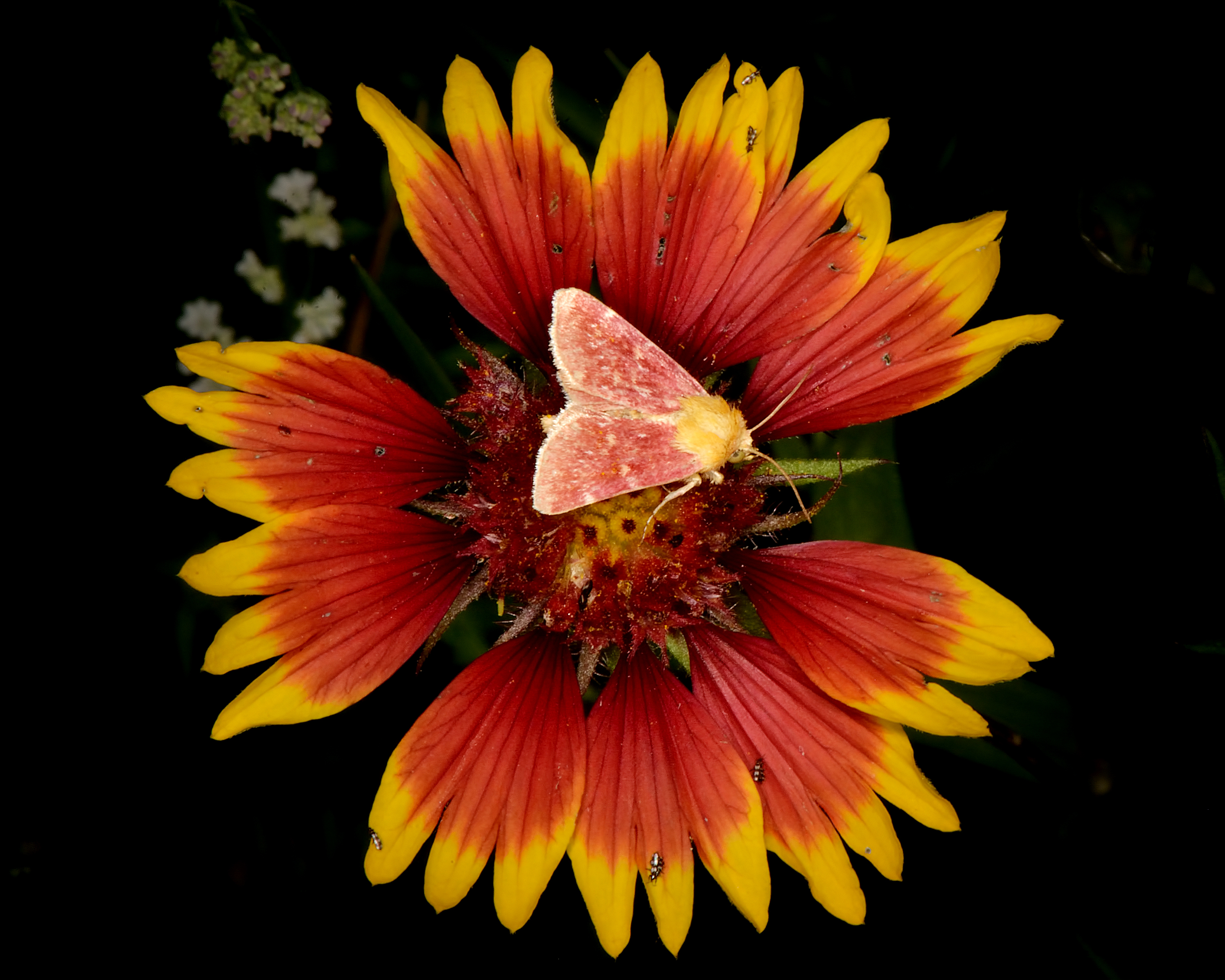
Of course, I could write this out in advance. But why? What if I don’t see the black-and-yellow lichen moth at the beginning of the walk? What if I see the Indian blanket moth instead? If I see the Indian blanket moth first, I will allow that moment of opportunity to introduce an entirely different underlying message, that of the advantages and risks of blending into your environment.

Prescripted interpretation for the trail would need to rise above these unexpected opportunities. Such a plan would need to be organized around a more general theme (“an interpretive trail offers diverse opportunities for understanding the natural world”, or some similarly tasteless, textureless pablum). Since we are engaged in in situ interpretation, I would  want to be sure that what I am interpreting is actually “in situ.” Otherwise, I am left interpreting a ghost, a figment, rather than a thing.

Are there advantages to the extemporaneous approach? Absolutely. For the interpreter, every day starts with a clean slate. Nature (or whatever the subjects might be) offers the cues, and challenges the interpreter to take the audience to places they, as well as the interpreter, have never been before. I will argue that the process is exhilarating to the audience, as well as the performer (the interpreter). This is walking the interpretive tightrope without a net.

Is this a better methodology? No. As I said in my article, the extemporaneous approach, an element of guerrilla interpretation, isn’t for everyone. You need to have the chops.

What does it take to master interpretation? You must be knowledgeable (about the profession as well as about the subject). You must be skilled (presentation, design, illustration, etc.). And, you must be creative. If the theme of a walk is its central insight, then give us a view that is new. Give us a revelation (didn’t Tilden say something to the effect that interpretation is revelation based upon information.)

I cannot think of a better way to exploit Tilden’s first principle – Any interpretation that does not somehow relate what is being displayed or being described to something within the personality or experience of the visitor will be sterile. Use what is at hand (the black-and-yellow lichen moth), and then embed that motif within a universal theme (the risks and rewards of specialization in a rapidly changing world).

And, of course, do all of this on the fly. Go guerrilla.

Indian blanket moth (Schinia volupia), Austin, Texas, by Ted Lee Eubanks

Interpretive Jazz

coloradoriver
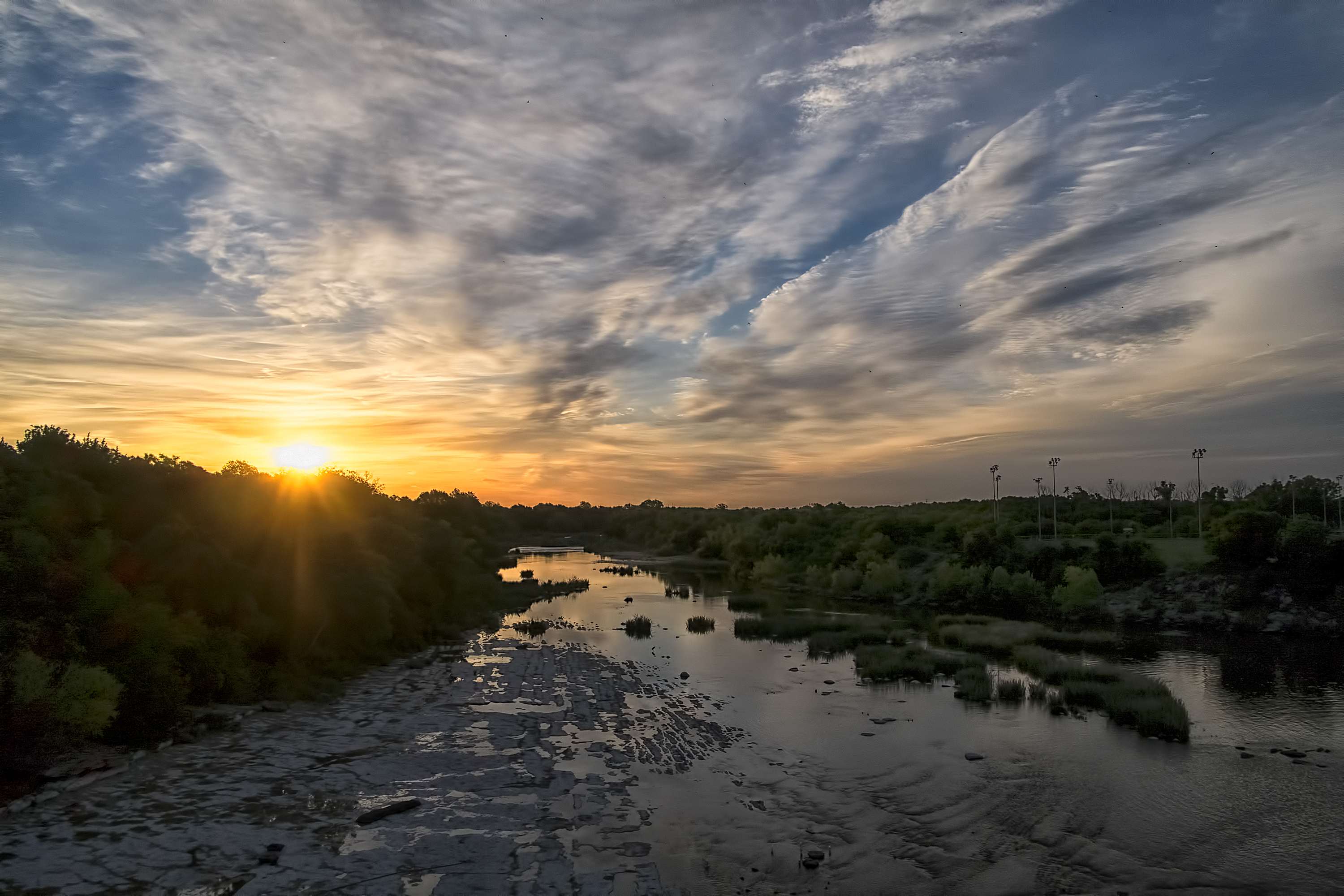
Colorado River below Longhorn Dam, Austin, Texas, by Ted Lee Eubanks

If you aspire to being something more than a guide, or an usher, or a glorified bush beater, then you will need to provide a service beyond finding things. You will need to find meanings.

Every program or tour doesn’t need to have a theme. You can function as a guide for example, and themes may never cross your mind. Take bird guides. Bird guides can find, call, attract, and identify birds. As long as they can do the above, a bird guide will be successful. Birding clients demand little more than an expanded life list. This isn’t interpretation, though. This is guiding.

If you aspire to being something more than a guide, or an usher, or a glorified bush beater, then you will need to provide something beyond finding things. You will need to find meanings. The moment that you cross that fine line between a thing and its meaning, you enter the rarefied air of interpretation.

Interpreters explore meanings. Meanings aren’t spoon-fed to the listener or reader. An interpreter only prepares the fertile ground where the visitor’s own meanings will grow. A theme is one way to define the boundaries of this fertile ground.

Themes shouldn’t throttle meanings. Themes are meant to be flexible, malleable. In fact, one strategy of guerrilla interpretation is to adapt the theme of a program as opportunities present themselves.

Adaptability is one of an interpreter’s greatest strengths when interpreting nature, for example. Nature changes with every new day, with every new moment. You can walk the same trail every day for the remainder of your life, and each day’s experiences will be singular. Why not take advantage of what each moment brings by being alert to their interpretive opportunities?

Black-and-yellow lichen moth (Lycomorpha pholus)
Black-and-yellow lichen moth (Lycomorpha pholus), Austin, Texas, by Ted Lee Eubanks

Here is an example. I walked along the Colorado River in Austin last week, just as I do virtually every day. I carried my camera (as I do virtually every day, as well). I noticed an interesting moth perched on a beggar’s tick (hedge-parsley), and took a couple of quick images. I identified the moth as a black-and-yellow lichen moth. The caterpillars of this moth only eat lichen.

Now, think of where I could take the program based on this one moth. I could talk about specialization, and how evolution favors those organisms that succeed by specializing in a way to avoid competitive exclusion. I could then interpret the lichens that the caterpillars are feeding on. I could talk about how lichens have succeeded through the symbiotic relationship between a fungus and an algae (or a cyanobacteria). I could talk about how lichens also have few competitors, and that the moth’s caterpillars are among the few predators that a lichen faces. And, I can pose the obvious question. What happens to a specialist when that plant or tree they depend on has been eliminated or destroyed? No lichen; no lichen moth.

Lichen
Lichen, Austin, Texas, by Ted Lee Eubanks

I would argue that the opportunity of the moment, the moth, gives me enough material for several programs, each branded and bound together with its own theme (symbiosis, specialization, competitive exclusion). I probably would have chosen specialization as my theme since I know of other species and stories along the way that will fit under that theme. Along the same trail, there is a sawfly whose young only feed on poison ivy, and a beetle that only feeds on the Hercules club tree. From there, I could expand to include the notion of biodiversity and endangered species.

Or, maybe I would have organized my walk around cryptic species, those that blend in with their surroundings. An example that I often see along my trail is the Indian blanket moth (Schinia volupia). The caterpillars of this moth only feed on Indian blanket (Gaillardia pulchella), and the adults are rarely seen away from the blossoms.

Guerrilla interpretation like I have described isn’t for everyone. Here’s an analogy. There are musicians that play from a written score. An orchestra is the perfect example of this approach. You play the notes that have been written for you.

On the other hand, there are musicians that take a basic melodic line and then extemporize. Jazz is the perfect example of such an approach. When you extemporize you walk the tight rope without a net. Not everyone is comfortable with playing extemporaneously, just as not everyone is comfortable with guerrilla interpretation. But, if you have the chops (talent, skill, experience, inspiration), this approach offers additional, expanded opportunities for engaging and inspiring an audience.

I may start a walk themelessly, and wait for the opportunity of the moment to bring inspiration and order to my walk. But, this isn’t to say that my program or talk remains themeless. I am an interpreter, not a guide. I simply wait for nature to give the cue.

Indian blanket moth (Schinia volupia), Colorado River, Austin, Texas, by Ted Lee Eubanks

Short Fuse, Big Bang

Guerrilla interpretation confronts, pricks, and unsettles, using the panoply of media to cast interpretive messages wherever an audience lurks.

New technologies do more than advance society, they disrupt. Innovations create new applications and new markets. Often the innovation precedes the market. Fred Smith had to convince businesses of their need for an overnight delivery before he could market FedEx.

Innovations disrupt existing markets, technologies, and applications, displacing those that came earlier. The railroads began struggling during the Great Depression as automobiles and air travel gradually displaced travel by train. Digital cameras replaced film. Digital music is replacing CD’s, which replaced compact cassettes, which replaced 8-track cassettes, which replaced vinyl records. Each new medium erases the one before.

Communications, as an industry, isn’t immune to such disruptions. Print ad revenues are now the lowest they’ve been since 1950. The average American 18+ spends over 11 hours per day using electronic media. Look closely at this infographic from Statista. Note the smartphone use; Americans now spend more time on their smartphones each day than surfing the Internet (a medium only 20 years old itself) from a desktop.

Infographic: Americans Use Electronic Media 11+ Hours A Day | Statista

Deloitte Australia has identified 13 industries comprising 65% of the Australian economy that are facing significant disruption by 2017. The industry most at risk? Information technology and telecommunication. Arts and recreation is another that Deloitte categorizes as being “short fuse, big bang.” Government services, in comparison, is a “long fuse, big bang” industry, a factor that may delay wholesale change within agencies that employ interpreters and interpretive services.

Larry Downes and Paul Nunes, writing in the Harvard Business Review, state that “big-bang disruptions differ from more-traditional innovations not just in degree but in kind. Besides being cheaper than established offerings, they’re also more inventive and better integrated with other products and services. And today many of them exploit consumers’ growing access to product information and ability to contribute to and share it.”

Look at the projected growth in global smartphone traffic, one aspect of this “growing access” to information. The smartphone app (now numbering over 1 million) is one way that information access is facilitated. According to Deloitte, nearly half (48%) of all organizations plan to offer mobile apps to customers within the next three to five years, compared to 18% now.

Infographic: Global Smartphone Traffic to Increase Tenfold by 2019 | Statista

If advertising, marketing, graphic design, and public relations have been upended by the digital revolution, why not interpretation? Are interpreters exempt from this transformation? If these technologies (the New Media) can replace the various media used by interpreters, will they replace the interpreters as well?

Yes, at least in their current form.

Changes have already taken place around the edges. No one types the text for a map or guide on a Remington or IBM Selectric anymore. Try to find a manual typewriter. Interpretive signs are digitally designed. Exhibits often include touch screen technologies. Museums have Facebook pages and a Twitter accounts. Yes, changes have taken place, around the edges.

Yet, interpreters appear to have generally dodged the disruption. The profession is able to skip along its well-worn path as if nothing is amiss. A revolution may be swirling around, but interpretation remains within its vortex, blithely unconcerned. Trainers worry more about which rubber toys to bring to their sessions than how to help interpreters avoid (or, at least, delay) displacement.

The disruptive impacts of digital technology are not evenly distributed, even within a single industry. And, just as different industries are threatened to different degrees by digital technologies, different interpretive functions are shadowed by different risks.

Interpretation is both medium and service. Interpreters are both creator and the created. A front-line interpreter mindlessly mouthing a script is a medium, and at risk of replacement or substitution. The interpretive planner that developed the original content and wrote the script, however, offers a unique creative service, one less easily duplicated or replaced by an algorithm or a bot.

A smartphone is a bring-your-own integrated digital platform. Delivering original content through bring-your-own platforms is disruptive. Personal interpretation is displaced.

A revolution may be swirling around, but interpretation remains within its vortex, blithely unconcerned. Trainers worry more about which rubber toys to bring to their workshops than how to help interpreters avoid (or, at least, delay) displacement.

New technologies disrupt without permission (think Uber). New Media will force new interpretation. The questions still be answered are how and if traditional interpretation will embrace this change and allow it to elevate the profession and practitioners.

Which of these New Media are the most disruptive? Which of these technologies actually advance interpretation? How do interpreters shape these technologies to their advantage? These questions, and more, will be answered our next installment of guerrilla interpretation.

The Nature Photography Revolution

To me, photography is an art of observation. It’s about finding something interesting in an ordinary place… I’ve found it has little to do with the things you see and everything to do with the way you see them…Elliott Erwitt

How many Americans watch birds? How many Americans care to know how many Americans watch birds? More importantly, at least for this essay, how many Americans photograph birds and wildlife, and, in general, nature?

The Outdoor Foundation, in its annual Outdoor Participation Report, estimated that around 14 million Americans watched birds in 2013. That number, around 4.9% of the population age 6 and older, has been relatively stable since 2007.

The U.S. Fish and Wildlife Service (USFWS), in its 2011 National Survey of Fishing, Hunting, and Wildlife-Associated Recreation, estimated that 17.8 million Americans age 16 and older took trips away from home to observe birds.

The number of birders committed enough to escape backyard feeding, between 14 and 18 million, underestimates the impact of the recreation. Not only does the number of birders matter, even more important are the numbers of days spent watching birds outdoors, at least from the standpoint of public use and economic impact, User-days (or outings) is a more accurate predictor of tourism and resource impacts than the overall number of recreationists.

A camera is a tool for learning how to see without a camera…Dorothea Lange

According to the Outdoor Foundation, birding is the third most favorite American recreation when measured by frequency of participation (lagging behind only running/jogging and biking). Birders and wildlife viewers averaged 39 outings per-person per-year, for a total of 1 billion outings in 2013. For a comparison, fishing is the fourth most favorite recreation, and anglers averaged around 20 outings per-person per-year.

The USFWS survey looks at a variety of ways that people watch wildlife. People feed wildlife, observe wildlife, and photograph wildlife. I am interested in the trends in these activities, particular the growth in photographing birds and/or wildlife when compared to observation.

In 2001, there are 20,080,000 wildlife observers who left home to recreate, and there were 9,427,000 wildlife photographers. Ten years later, the number of wildlife observers had stayed relatively flat (a 1% decline to 19,808,000), while photography had grown by 31% (to 12,354,000 away-from-home wildlife photographers). Outings tracked a similar pattern. Observers spent 295,345,000 days in the field in 2001, dropping to 268,798,000 in 2011 (a decline of 9%). Wildlife photographers spent 76,324,000 days out in 2001, growing to 110,459,000 in 2011 (an increase of 45%).

To me, photography is the simultaneous recognition, in a fraction of a second, of the significance of an event…Henri Cartier-Bresson

Why is this important? The growth in wildlife and bird photography is helping mitigating for the losses in people observing or feeding birds. Photography is the engine that is propelling many toward nature in the 21st Century.

The next USFWS survey should be out next year. I am eager to see how the growth in wildlife photography is captured in the new report. The past five years have seen photography grow at an unprecedented rate. According to 1000memories, “Every 2 minutes today we snap as many photos as the whole of humanity took in the 1800s.”

There are over 350 million images posted to Facebook each day. What if only 1% of those images are related to nature? That’s still 3.5 million images being shared daily!

The rise of digital photography has breathed life into birding and wildlife observation. Photographers are doing much more than looking; photographers are chronicling. The ability to record and then instantly share what you see is a powerful influence in the ways that people are approaching nature.

People are sharing experiences with their images. There is an ad hoc interpretation taking place, one that is introducing swaths of our population to nature in new and credible ways. According to Neilsen, “Ninety-two percent of consumers around the world say they trust earned media, such as word-of-mouth and recommendations from friends and family, above all other forms of advertising.” What is a Facebook photo if not “earned media”? Look at the number of nature tour companies and destinations posting images in Facebook groups and other digital platforms. What could be a more perfect example of content marketing?

trust-in-advertising

Consider this example. The Facebook page Texbirds focuses on rare birds seen in that state. The “rules on photos” from that page state that PHOTOS MUST SHOW SOMETHING, I.E. EARLY OR LATE SPECIES, UNUSUAL BEHAVIOR, UNUSUAL FOR LOCATION, ETC. PHOTOS JUST TO SHOW OF A PRETTY PHOTO ARE NOT ALLOWED. IF YOU JUST WANT TO SHOW OFF YOUR PRETTY PHOTOS PLEASE JOIN THE BIRDS OF TEXAS GROUP FOR THAT (their all caps, not mine). Texbirds has 3,604 members.

The Facebook group referenced in the above rules is Birds of Texas. Birds of Texas only requires that the photos be of Texas birds. Otherwise, any bird image is welcomed, no matter how common the bird. Birds of Texas has four times as many members as Texbirds (12,283). In fact, the Birds of Texas group, focused only on one state, has attracted twice as many members as the American Birding Association Facebook group (6,251 members) that covers the entire nation.

The creative act lasts but a brief moment, a lightning instant of give-and-take, just long enough for you to level the camera and to trap the fleeting prey in your little box…Henri Cartier-Bresson

I see no reason for this trend not to continue. As more affordable digital cameras suitable for nature photography are brought to the market (such as the Canon Powershot SX50 or SX60), the growth in nature photography will only accelerate. Demands for enhancements that are desired by photographers will only increase pressure on public land managers, as well.

The USFWS, the resource agency that manages the nation’s wildlife refuges, has traditionally dumped all wildlife observers, feeders, and photographers into one bucket. This is no longer appropriate or meaningful. The needs and desires of photographers are not necessarily the same as those of observers. The size of this recreational population (to over 12 million in 2011, and, even if the rate of 31% rate of growth has only remained constant) now totals over 16 million Americans. This segment of the wildlife recreation population has been relatively shy and hidden to date, but I doubt that this reticence will continue.

For interpreters, there needs to be a recognition that park, refuge, and museum staffs are not the only ones empowered to interpret these special places. Out of these 250 million images posted each day, how many were uploaded by interpretive staff? How can interpretive messages rise above the din? What if the messages from friends and family are considered more credible than those from official staff?

For those who have spent their lives promoting recreation as the primary vector that leads people to nature, this revolution in nature photography could not be more welcome. People are finding their ways to nature; they just aren’t following the traditional paths laid before them. Let’s hope that those agencies and institutions that are being confronted by this growth are prepared to nurture it to maturity.

It is my intention to present – through the medium of photography – intuitive observations of the natural world which may have meaning to the spectators…Ansel Adams

Ted Lee Eubanks
12 Jan 2015